Rehabilitation After Joint Replacement Surgery: A Complete Guide to Senior Care Services in Madurai
Joint replacement surgery, such as knee or hip replacement, can greatly improve mobility and quality of life for seniors suffering from severe arthritis or joint damage. However, the success of the surgery depends not only on the procedure itself but also on proper rehabilitation afterward. For families seeking reliable Senior Care Services in Madurai, understanding the rehabilitation process can help ensure a smoother and safer recovery for elderly loved ones.
Why Rehabilitation Is Important After Joint Replacement
Rehabilitation helps seniors regain strength, flexibility, and confidence in movement. Without proper rehabilitation, recovery may be slower, and patients may experience stiffness, weakness, or difficulty performing daily activities.
Key benefits of rehabilitation include:
- Faster recovery and healing
- Reduced pain and stiffness
- Improved joint mobility
- Enhanced muscle strength
- Better balance and coordination
- Reduced risk of complications such as blood clots and falls
- Greater independence in daily life
Common Joint Replacement Surgeries in Seniors
The most common joint replacement procedures among older adults include:
- Knee Replacement Surgery: Replaces damaged knee joint surfaces with artificial components.
- Hip Replacement Surgery: Replaces a worn or damaged hip joint with an artificial implant.
- Shoulder Replacement Surgery: Replaces damaged parts of the shoulder joint to relieve pain and restore movement.
Each surgery requires a structured rehabilitation program tailored to the patient’s needs and overall health condition.
Stages of Rehabilitation After Joint Replacement
Immediate Post-Surgery Phase
During the first few days after surgery, the focus is on pain management, gentle movement, and preventing complications.
Typical activities include:
- Breathing exercises
- Ankle pumps to improve circulation
- Gentle range-of-motion exercises
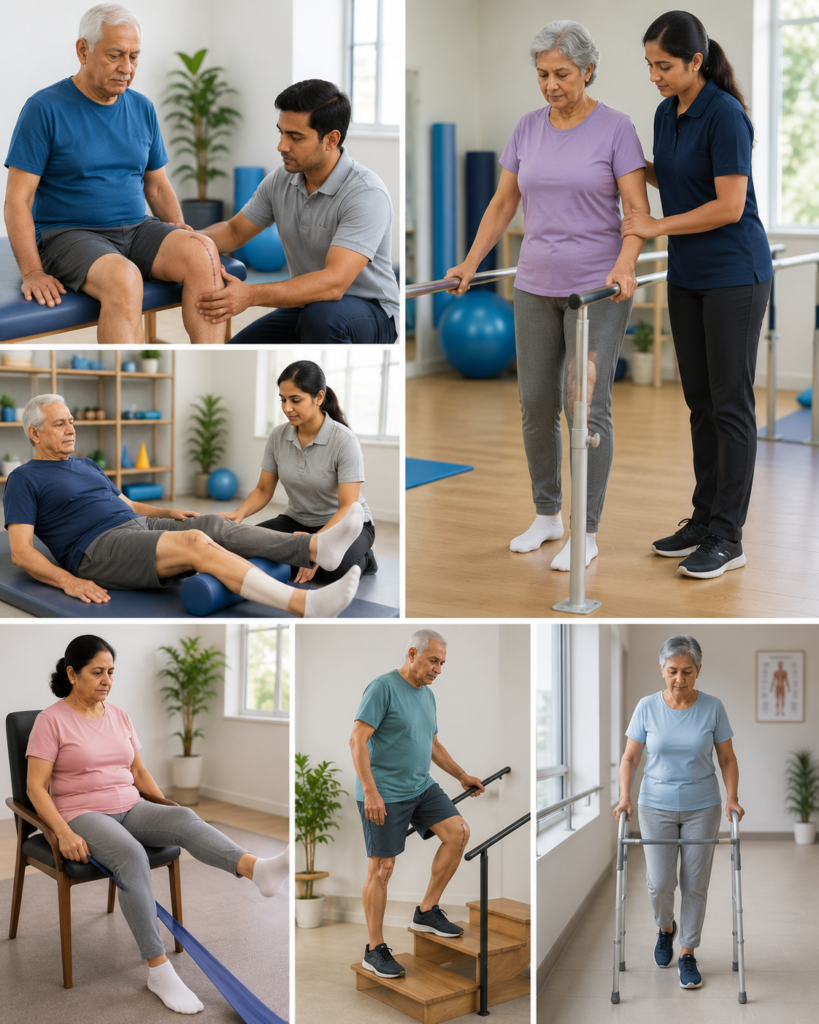
- Assisted standing and walking with a walker or crutches
Professional caregivers and physiotherapists play a crucial role in ensuring these activities are performed safely.
Early Rehabilitation Phase
During the first few weeks, exercises become more focused on restoring mobility and strength.
Common exercises include:
- Chair stands
- Leg raises
- Heel slides
- Walking short distances
- Balance training exercises
Patients are encouraged to gradually increase activity levels while following medical advice.
Advanced Rehabilitation Phase
As healing progresses, rehabilitation focuses on improving endurance, balance, and functional movement.
Activities may include:
- Longer walking sessions
- Stair climbing practice
- Resistance exercises
- Flexibility and stretching routines
- Functional training for daily activities
This phase helps seniors return to normal routines with greater confidence and independence.
Physiotherapy: The Cornerstone of Recovery
Physiotherapy is one of the most important components of post-surgical rehabilitation. A qualified physiotherapist designs a personalized program based on the patient’s age, surgery type, and physical condition.
Physiotherapy helps by:
- Reducing pain and swelling
- Improving joint flexibility
- Strengthening muscles around the new joint
- Enhancing balance and coordination
- Teaching safe movement techniques
Regular physiotherapy sessions can significantly improve recovery outcomes and reduce the risk of future mobility issues.
Role of Senior Care Services in Madurai
Professional Senior Care Services in Madurai provide comprehensive support during the rehabilitation process. These services are especially valuable for seniors who require assistance at home after hospital discharge.
Services may include:
- Personalized rehabilitation support
- Assistance with walking and mobility
- Medication reminders
- Help with bathing, dressing, and daily activities
- Physiotherapy coordination
- Fall prevention measures
- Emotional and companionship support
Having trained caregivers available can make recovery safer and less stressful for both seniors and their families.
Tips for a Successful Recovery
- Follow Medical Instructions: Always follow the surgeon’s and physiotherapist’s recommendations regarding activity levels and exercises.
- Stay Active: Gradual movement is essential for preventing stiffness and improving circulation.
- Maintain a Healthy Diet: Adequate protein, calcium, and vitamin D support healing and bone health.
- Use Mobility Aids Safely: Walkers, canes, and handrails can help prevent falls during recovery.
- Keep the Home Environment Safe: Remove tripping hazards, improve lighting, and install grab bars if needed.
- Attend Follow-Up Appointments: Regular checkups help monitor healing and address any concerns promptly.
Common Challenges During Rehabilitation
Some seniors may experience:
- Pain and swelling
- Fatigue
- Fear of falling
- Difficulty performing exercises
- Emotional stress or frustration
Professional caregivers and physiotherapists can provide encouragement, supervision, and practical assistance to overcome these challenges.
Why Families in Madurai Choose Professional Rehabilitation Support
Families often choose professional rehabilitation services because they provide expert guidance, consistent care, and personalized attention. Seniors benefit from structured recovery plans, while family members gain peace of mind knowing their loved one is receiving proper support.
Conclusion
Rehabilitation after joint replacement surgery is essential for restoring mobility, strength, and independence in seniors. A combination of physiotherapy, safe exercise, proper nutrition, and professional caregiving can significantly improve recovery outcomes. For families seeking trusted Senior Care Services in Madurai, comprehensive rehabilitation support ensures that elderly loved ones can return to an active and comfortable life with confidence.